Next.js Development Agency
Launch campaigns the week you plan them, and turn more visitors into booked demos.
We design and build conversion-focused B2B marketing sites on Next.js and headless CMSs, using AI-assisted workflows to ship pages and interactive lead-gen experiences in days.
Trusted by 20+ B2B and AI companies.

$65K+
Annual hosting savings

10+
MQLs/day within 6 weeks

They delivered the site at record speed. Since the revamp, we've seen a 35% increase in organic traffic from ICPs and stronger conversions across the board.
Dimitrije Gujanicic
Growth Coordinator @Bland AI

So we ran it as a test, on the one site we're free to break. It turned out to be the best thing we could have done for our inbound marketing and for executing our GTM.
Evgenii Tilipman
Founder & Tech Lead @Khod

300%
Demo engagement increase

60+
SEO pages developed
Project Highlights

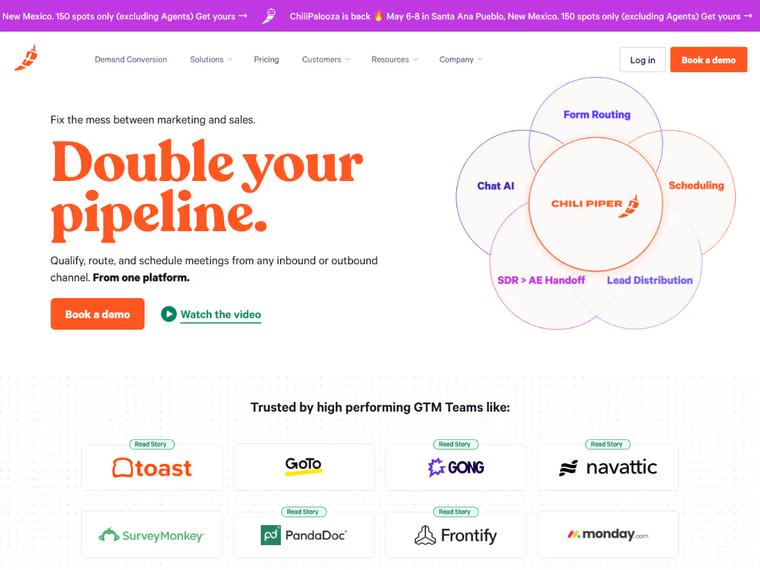
Chili Piper: Repositioning & Solving a $65K/Year Webflow Enterprise Problem
Switching Webflow partners unlocked a solution Chili Piper didn’t know existed—avoiding a forced Enterprise upgrade and saving $65K+ per year in hosting costs.

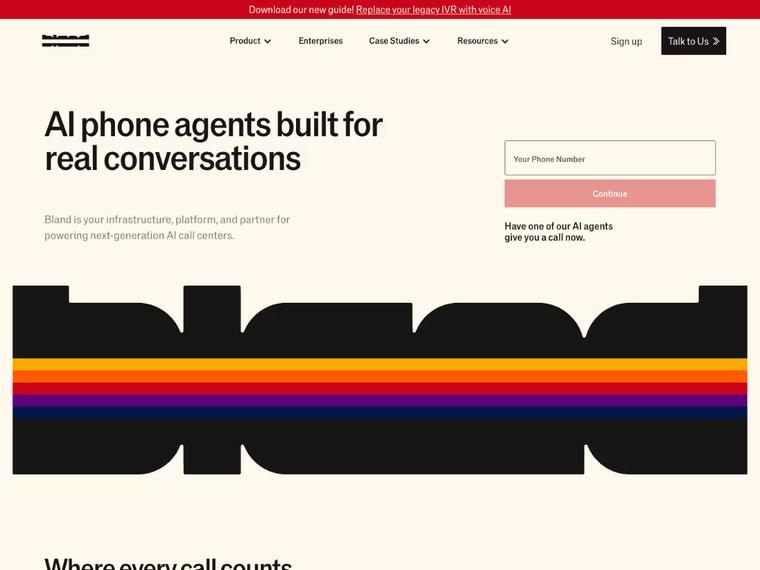
Bland AI: A High-Speed Revamp That Drove 35% More Traffic Post-Series B
Delivered in record time ahead of their Series B announcement. Since launch, Bland AI saw a 35% increase in organic traffic from their ideal customer profiles — plus stronger on-site conversions.

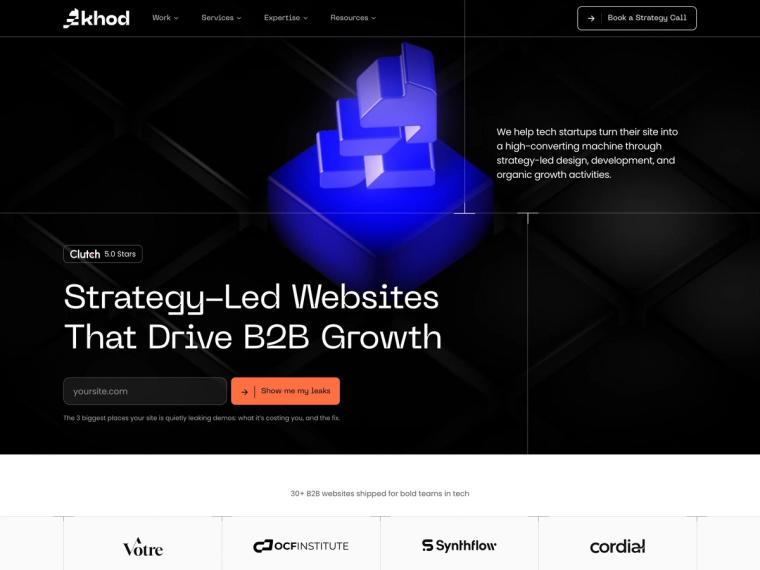
Khod on Next.js, Sanity and Vercel: The First Three Months
We rebuilt khod.io's 180+ pages on Next.js, Sanity and Vercel in under a month. Mobile Lighthouse moved from the low 60s into the 80s, and the stack has shipped 13 launches since.
Sound Like Your Week?

Visitors Who Aren't Ready to Talk Just Leave
The only next step on the site is “Book a demo,” so everyone earlier in their search closes the tab.

Every Page Change Waits for a Developer
A new landing page takes weeks to ship, so campaigns launch late or point at the homepage.

Every Visitor Goes Straight to Sales
The site has one form, so tire-kickers and serious buyers end up on the same calendar.

Traffic Hasn't Moved in Weeks
New pages go live, and the traffic graph stays flat.

Visitors Leave Before the Website Loads
Pages take seconds to appear on a phone, and buyers close the tab first.

Nobody Knows Which Pages Bring Leads
Leads come in, and nobody can say which page or campaign sent them.
How Our Next.js Development Services Fix Each One
Every project includes the design, the build and the CMS setup, plus moving your current pages over if you have a site. These are the parts that fix the problems above, in the same order.

Self-Serve Audits and Checklists
Something to do for visitors who aren't ready to talk.
Interactive checklists, self-serve audits and gated playbooks that trade a useful result for an email.

Landing Pages Marketing Ships Alone
Campaign pages go live the day the campaign does.
Marketing builds pages from your own blocks in the CMS, without a developer.

Interactive Tools That Help Leads Qualify
Visitors get an answer to their own question, and sales learns who they are before the call.
ROI and pricing calculators, fit quizzes and estimators that send every answer to your CRM.

Pages Built to Rank and Be Quoted by AI
Content that search engines and AI assistants can read.
Server-rendered pages with metadata, structured data and Markdown versions for AI crawlers, plus templated pages generated from your own data.

Pages That Load Before Visitors Leave
Fast on a phone, on a slow connection, on the first visit.
Each page ships only the code it uses, images and fonts are optimized, and Core Web Vitals are checked before launch.

An Agent That Turns Your Data Into Next Steps
Every week, a report on what's working and what to do next.
It pulls Google Search Console, GA4, PostHog and your CRM, reads them together and lists the week's moves: pages to fix, campaigns to push, leads to follow up. We run the same system on khod.io every Monday.
Why Pick Next.js for Your Marketing Website

Custom Code Loads Faster Than Site Builders
Webflow, WordPress and Framer load their own scripts and styles on every page, whether the page uses them or not. Custom code ships only what each page needs. Moving khod.io from Webflow to Next.js took mobile Lighthouse from the low 60s to the low-to-mid 80s.

Pages and Features Ship in Days
We build with agentic workflows: AI agents write and test the code while our team directs and reviews it. Pages and features ship faster than with hand-written code or a site builder. In the three months after our own rebuild, 13 launches went live on khod.io.

Your Own Website Builder on a Headless CMS
Next.js pairs with the headless CMS you choose, such as Sanity or Payload. We turn your design into components, and marketing assembles pages from them in a visual editor, the same way a site builder works, with your own blocks.

Organic Traffic From Search and AI
Pages are served as fast, complete HTML with structured data, so Google can rank them and AI assistants like ChatGPT and Perplexity can read and quote them. Each page can also publish a plain Markdown version for AI crawlers.

Next.js at the core.The stack we pair it with.
- SanityHeadless CMS
- PayloadHeadless CMS
- shadcn/uiComponent library
- Tailwind CSSStyling
- VercelHosting and deploys
- CloudflareCDN and security
- PostHogAnalytics and replays
- HubSpotCRM and forms
How Our Next.js Development Process Works
Two to six weeks from the strategy week to launch. Design and development happen together in the browser, so what you review is the working site.

Discovery & Strategy, powered by GROW
You get a clear, agreed roadmap before a single pixel is designed. The first week runs on our GROW framework: we align on goals, audience, conversion strategy and what success is measured by, so every build decision is aimed at your buyer.

Wireframes and Content Architecture
We map every page and section before anything is styled: what each page has to say, in what order, and which action it drives.

Design and Development
Agentic workflows let us design directly in code. You review each page as a working site in the browser, at every screen size, and feedback goes straight into the build.

CMS Blocks
We turn the finished sections into components in your headless CMS, so marketing can build new pages from them without a developer.

SEO Due Diligence and QA
Redirect map, metadata, structured data, sitemaps and Core Web Vitals, plus testing across browsers and devices. On a migration, every indexed URL is accounted for first.

Launch and 90 Days of Monitoring
We run the go-live ourselves, fix anything that surfaces, and monitor rankings for 90 days after launch.
What Our Clients Say

"Khod feels like an extension of our internal team. They always meet their deadlines and set expectations we can actually trust. Highly recommend!"

Batıkan Erdoğan
Head of Growth & Conversion Systems @Chili Piper

"Khod rebuilt our site across multiple iterations and kept the process tight. They communicate proactively, and are now helping us scale around 60 SEO landing pages ."

Ethan Clouser
Head of Marketing @Bland AI

"Only a couple weeks after launch we have consistently received multiple leads and demos scheduled every day . All of this has been organic up to this point which is awesome."

Kyle Fedewa
Co-Founder @Speculo AI

"Because of their quick turnarounds, we're able to launch campaigns on time, push new pages live when we need them, and ultimately drive pipeline faster ."

Madeleine Work
Head of Marketing @PortPro

"Working with Team Khod not only exceeded but completely shattered our expectations."

Wilma Eriksson
CEO @Vloxq

"Since the revamp, the site has seen a 240% increase in organic traffic and a steady rise in qualified leads. The animations and smooth UX get constant praise — and the site now plays a key role in closing deals."

Kimon Tousmanof
Marketing Lead @Morphoses

"Khod helped us grow website traffic by 500% and unlock new revenue streams through our online academies. It now drives revenue month over month."

Umar Mallam Hassam
CEO @The Accountant Quits

"The revamp gave us instant credibility — traffic is up 504% and we’re getting more interest from leads than ever before."

Venkatesh Rengarajan Muthu
Co-Founder & CEO @Blockpeer

"We needed to migrate our redesigned Webflow site without losing SEO gains —and Khod nailed it. From boosting our technical health to 95% to content strategy, they’ve been phenomenal."

Ariel Eiberman
CMO @Cryptoworth

"We had nothing but a name and an idea — Khod helped us launch a brand that now wins calls , earns interest , and builds trust in the Web3 space."

Nauman N. Mustafa, cpa
Founder @HashLedger

"Khod tackled the challenge of complex design even with the changes in scope."

Ekaterina Kapotina
Co-Founder & Ops Director @Vis-on

"Khod did a fantastic job developing a website for us quickly and professionally with rapid revision cycles."

J. Paul Meyer
Founder & CEO @Votre

"Khod's project management was amazing. They were very transparent and organized, so I knew exactly what needed my attention, what was getting fixed, and what was launched."

Javier Lozano
Director of Marketing @ProEdge Dental Water Labs

"When we asked for their feedback, they shared without hesitation, which is exactly what we wanted/needed."

Michael Bell
COO, RHMMed (Regenerative & Hormone Medicine)
Frequently Asked Questions
How much does a Next.js website cost?
Projects start at $5,000. The final number depends on the number of page types, whether we design the site, and how many custom features it needs, and we quote it after a strategy call. The cost breakdown covers what drives the number.
How long does a Next.js build take?
Two to six weeks from the strategy week to launch. Where a site lands in that range depends on the number of page types and how quickly designs and content are signed off.
Can our marketing team edit the site without a developer?
Yes. Pages are built from blocks in the CMS, so marketing writes copy, rearranges sections and launches new pages on its own. A brand-new type of section is a development task. Once it exists, it's one more block to pick from.
Do we need developers on staff after launch?
No. Day-to-day changes happen in the CMS. When you need a new section type or feature, bring us back or hand the codebase to any React developer.
If nobody on your team will touch code and you expect to need new layouts often, a visual site builder costs less to run, and we'll tell you so on the first call.
Is Next.js the right choice for our marketing site?
It fits when the site needs logic: personalization, gated areas, pages generated from product data, interactive tools, or engineers who want the site in the same stack as the product. For content-heavy sites with little interactivity, Astro is lighter; we rebuilt TAQ on Astro. We recommend the stack on the strategy call, before any build is scoped.
Will we lose rankings if we move to Next.js?
Not if the move is planned around them. We inventory every indexed URL, keep the URLs that work, redirect only what changes and monitor rankings for 90 days after launch. How a redesign affects SEO shows what we check.
Who owns the code and the hosting?
You do. The repository, the hosting and the CMS sit under your company's accounts, and we work inside them.
Have you built on Next.js before?
Our own site runs on it. We rebuilt khod.io's 180+ pages on Next.js, Sanity and Vercel in under a month, and mobile Lighthouse scores moved from the low 60s to the low-to-mid 80s. The first three months are written up in Khod Labs.
Resource Spotlight
Still deciding? These answer the questions teams ask us before moving to Next.js.

Tell Us What the Site Has to Do
Bring your current site and the list of things it can't do yet. On the call we'll tell you whether Next.js is the right stack for it and what the build involves.