Sanity Agency
Launch pages the day you plan them, without waiting on a developer.
We build your Sanity CMS around how your marketing team publishes: on-brand page sections, a live preview of every change, and a fast Next.js or Astro front end.
30+ B2B websites shipped for bold teams in tech


Khod feels like an extension of our team; fast, proactive, and always delivering beyond expectations.

Batıkan Erdoğan
Head of Growth & Conversion Systems @Chili Piper


They rebuilt our site through multiple iterations and are now helping us scale 60+ SEO landing pages.

Ethan Clouser
Head of Marketing @Bland AI


They helped us launch an enterprise-ready site despite tight deadlines.

Anna Maikova
Head of Product Marketing & GTM @Synthflow AI




Their quick execution keeps our campaigns on schedule and our pipeline moving.

Madeleine Work
Head of Marketing @PortPro


Within six weeks of launch, traffic and conversions more than 2×-ed.

Brandon Redlinger
Fractional CMO @Avarra AI


They clarified our AI product for non-technical buyers — and within weeks, we were generating daily organic leads and demos.

Kyle Fedewa
Co-Founder @Speculo AI


They migrated our redesigned Webflow site without losing SEO momentum and boosted technical health to 95%.

Ariel Eiberman
CMO @Cryptoworth
Project Highlights

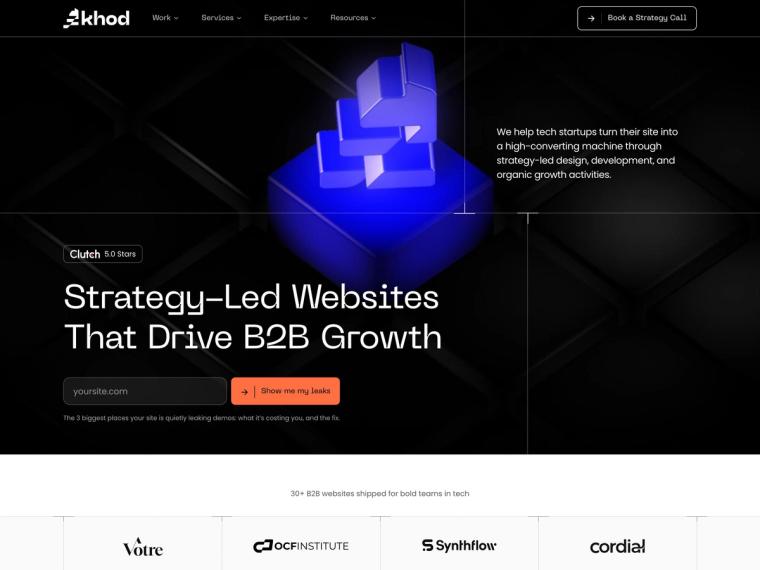
Khod on Next.js, Sanity and Vercel: The First Three Months
We rebuilt khod.io's 180+ pages on Next.js, Sanity and Vercel in under a month. Mobile Lighthouse moved from the low 60s into the 80s, and the stack has shipped 13 launches since.
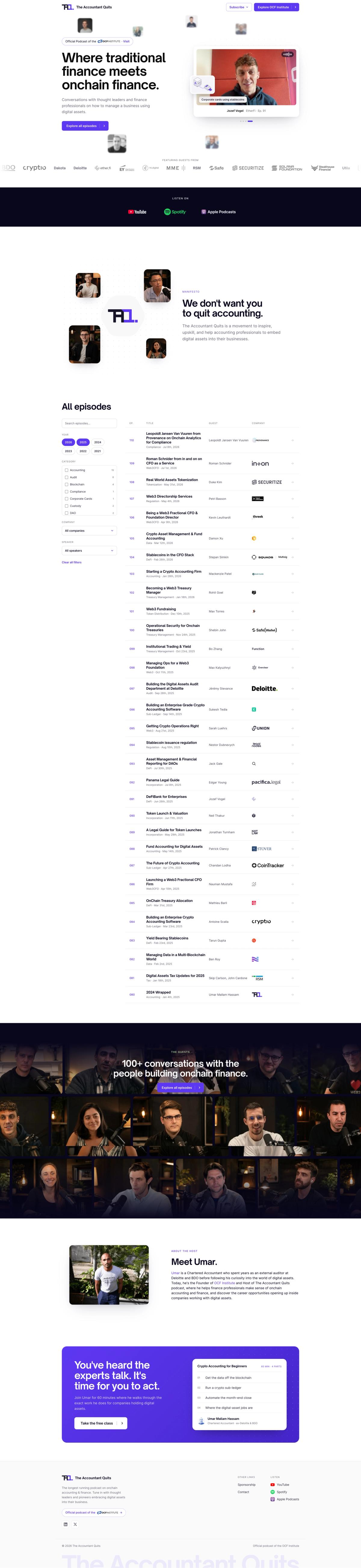
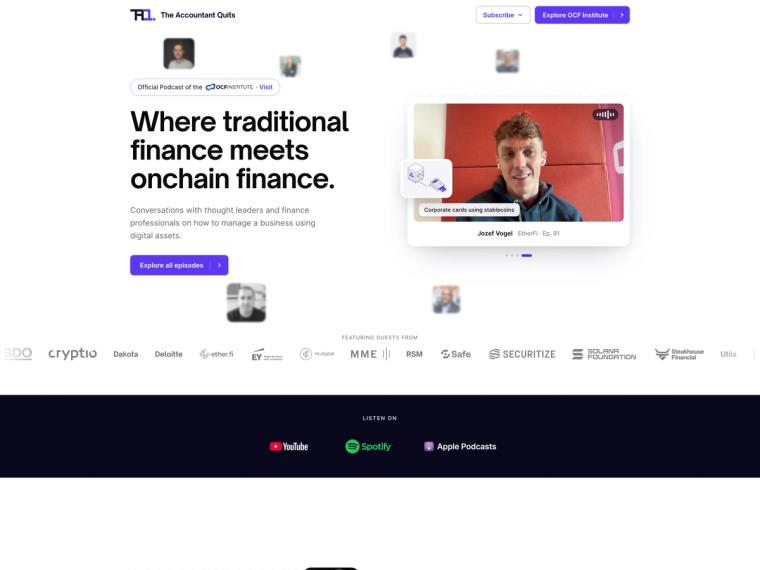
The Accountant Quits: A Brand Going Back to Its Roots
Khod moved The Accountant Quits' 110-episode site off Webflow onto a custom Astro/Sanity stack in about a week, after its education arm split off into its own brand. The client can still edit everything themselves — just not in Webflow anymore.
Is Your CMS Slowing Your Marketing Team Down?

You Wait on a Developer to Change One Headline
A two-minute copy fix turns into a ticket, and the ticket takes two days.

Every New Kind of Page Turns Into a Workaround
You want to add case studies or job posts, but the CMS was set up for blog posts only, so they get forced into a template that doesn’t fit.

Only One Person Knows How to Publish
The fields have confusing names, and the steps live in a Slack thread nobody else can follow.

Your Pages Barely Show Up in Search
Titles and descriptions get filled in by hand, if at all, and parts of the page load after it opens, so search engines and AI assistants see a thin version of it.

You Update the Same Thing on Ten Pages
A price or a logo changes, and your afternoon goes on hunting down every page it sits on.

New Features Take Months to Ship
A calculator, a new kind of block or a landing page layout joins the developer backlog and ships next quarter.
Sanity CMS Development, Built Around Your Team
Every project includes the content structure, the editor setup and the website build, plus moving your current pages over if you have a site.

Change Any Page Yourself
Your pages are built from ready-made sections, so you change copy, images and whole pages without filing a ticket. Our own site, the one you’re on, is built on Sanity and uses about 50 sections.

Every Kind of Page Gets Its Own Template
Case studies, events and job posts each get their own fields and layout, so adding one is as easy as writing a blog post.

Publish From Sanity or Through Your AI Agent
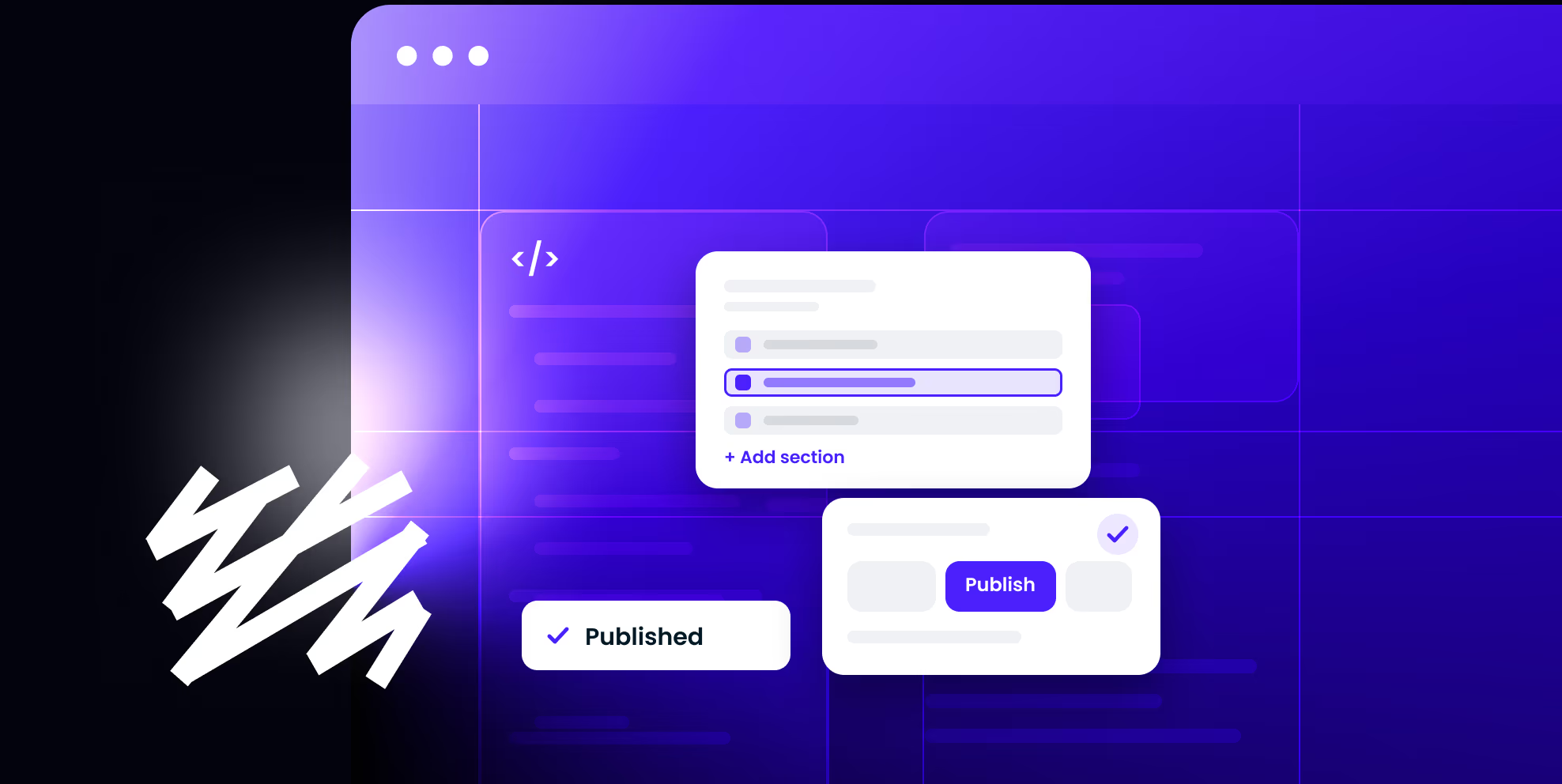
The fields are named the way your team talks, so anyone on the team can build a page: pick a section, fill it in, check the preview and hit Publish.
Or ask your AI agent to draft the page, then review it in Sanity and publish it yourself.

Built for Google and AI Search
Every page is rendered on the server, so search engines and AI assistants get the full page on the first visit. Titles, descriptions and structured data are filled in from your content automatically.

Change It Once, and It Updates Everywhere
Prices, logos and team members live in one place. Edit them once, and every page that uses them updates.

New Features Ship in Days
When you need a calculator or a new kind of section, we build it with AI agents that write and test the code while our team directs and reviews it.
Agents can also watch your analytics and flag what to fix next on the site, like a slow page or a form that stopped converting.
Sanity vs Other CMS
Sanity stores content as structured data and leaves the website to your developers. That’s the trade: more setup at the start, then a CMS that fits your content instead of the other way round. What Is Sanity CMS? explains how it works.
| What your team needs |  Sanity | Webflow CMS | WordPress | Contentful |
|---|---|---|---|---|
| Who builds pages | Marketers, from sections your developers define | Designers on the canvas; editors change copy | The block editor or a page-builder plugin | Editors fill in fields; page building needs extra setup |
| Preview before publishing | The live page next to the fields while you edit | Changes show on the canvas | A preview per post | Has to be set up by developers |
| Content reuse | One document, used everywhere it appears | References inside collections, limited by plan | Needs plugins or custom fields | References between entries, like Sanity |
| Custom content types | Defined in code, no fixed cap | Collections capped by plan | Custom post types through code or plugins like ACF | Content types capped by plan |
| New layouts | A developer task, then one more block to pick | Designers build them without code | Depends on the theme | A developer task |
| Hosting | Hosts the content; the site runs on Vercel or similar | Hosts everything | A host you manage | Hosts the content, like Sanity |
| Price at our size | $0 on the Free plan | A paid site plan for the CMS, plus Workspace seats | Free software; paid hosting and plugins | A free tier, then paid plans |
How a Sanity
Project Runs
Two to six weeks when we build your existing design, six to ten when we design the site too. The content structure comes before design, because it decides what your team can publish for years.

Discovery & Strategy, powered by GROW
You get a clear, agreed roadmap before a single pixel is designed. The first week runs on our GROW framework: we align on goals, audience, conversion strategy and what success is measured by, so every build decision is aimed at your buyer.

Content Structure
We map every content type, field and reference before anything is styled: what editors fill in, what gets reused across pages, and who can publish what.

Design and Development
Agentic workflows let us design directly in code. You review each page as a working site in the browser, at every screen size, and feedback goes straight into the build.

Editor and Page Sections
The finished designs become page sections in your editor, with names your team uses and a live preview next to every field.

Content Migration and SEO QA
If you have a site, we move its content into the new model, map every indexed URL to its new address, and check metadata, structured data and redirects against the old site.

Launch and 90 Days of Monitoring
We run the go-live ourselves, fix anything that surfaces, and monitor rankings for 90 days after launch.
When Sanity Isn't the Right Call

Your Team Designs New Layouts Visually Every Week
If designers build fresh layouts on a visual canvas every week, Webflow fits that better. In Sanity, a new kind of layout is a developer task.
Your Current CMS Is Doing Its Job
If publishing is quick and the site isn't holding marketing back, a move costs more than it returns.

Nobody Will Look After the Stack
A Sanity site has code, hosting and a CMS to maintain. Without a developer or a retainer, a hosted site builder is the safer choice.

You Aren't Ready for a Rebuild
Moving to Sanity means rebuilding the front end. If that isn't in this year's budget, fix the content model you have first.
Pricing and Timeline
Every project is scoped on a strategy call. The number depends on whether we design the site, how many page sections and kinds of pages it needs, and how much content moves across. Sanity itself is often free at the start: our own site runs on the Free plan.
Start with a project, then keep building with us every month.
One-time projects
Ongoing
A new website, designed and built on Sanity.
Investment from $10,000
“Khod helped us grow website traffic by 500%… It now drives revenue month over month.”
Umar Mallam Hassam, CEO @The Accountant Quits
Best for
Teams that need a new design along with a new CMS. Strategy, design, development and launch from one team.
What’s included
- GROW week: URL inventory, redirect map and content architecture
- Design: custom design for every page template
- Editor setup: Sanity page sections your team builds pages from
- Development: Next.js or Astro, server rendered
- Migration: content moved across, redirects tested before launch
- SEO: metadata and structured data on every page
- Launch: rankings and traffic monitored after go-live
Timeline
What Our
Clients Say

"You can't call yourself innovative and then avoid the technology you'd have to learn to stay that way. So we ran it as a test, on the one site we're free to break. It turned out to be the best thing we could have done for our inbound marketing and for executing our GTM."

Evgenii Tilipman
Founder @Khod

"Khod helped us grow website traffic by 500% and unlock new revenue streams through our online academies. It now drives revenue month over month."

Umar Mallam Hassam
CEO @The Accountant Quits

"Khod rebuilt our site across multiple iterations and kept the process tight. They communicate proactively, and are now helping us scale around 60 SEO landing pages ."

Ethan Clouser
Head of Marketing @Bland AI

"Khod feels like an extension of our internal team. They always meet their deadlines and set expectations we can actually trust. Highly recommend!"

Batıkan Erdoğan
Head of Growth & Conversion Systems @Chili Piper
"They delivered the site at record speed. Since the revamp, we’ve seen a 35% increase in organic traffic from ICPs and stronger conversions across the board."

Dimitrije Gujanicic
Growth Coordinator @Bland AI
Frequently Asked Questions
Is Khod the right Sanity agency for us?
We fit B2B and AI companies whose marketing team needs to publish without waiting on a developer, and who want one partner for the content structure, the website and the launch. If nobody on your team edits the site, or your current CMS does its job, we’ll tell you on the call.
How much does a Sanity agency cost?
Building your existing design on Sanity, or moving your site across as it looks today, starts at $5,000. Design and build together starts at $10,000, and a monthly retainer after launch starts at $2,000. The final number depends on the content structure, the number of page sections and how much content moves across. Sanity itself is often free at the start: our own 180+ page site runs on the Free plan. Our Sanity pricing guide covers the plans.
How long does a Sanity build take?
Two to six weeks when we build from your existing design, and six to ten weeks when we design the site too. Our own site, 180+ pages, moved from Webflow to Sanity between June 16 and July 4, 2026.
Sanity or Webflow: which should we choose?
We build both, so we have no reason to push either. The practical rule is simple: if your designers build new layouts visually every week, choose Webflow. If you reuse content across many pages, need your own content types and have a developer or an agency behind you, choose Sanity.
Can our marketing team run the site without developers?
Yes, for everything built from existing sections: copy, images, new pages, page order and publishing. A brand-new kind of section is a developer task. Once it exists, it’s one more block to pick in the editor.
Can you move us from Webflow or WordPress without losing rankings?
Every indexed URL is mapped to its new address before launch, redirects are tested, and metadata and structured data are checked against the old site. Then we watch rankings after launch. The Webflow to Sanity migration page shows how that runs.
Do you pair Sanity with Next.js or Astro?
Both. Astro for marketing sites where speed matters most, Next.js when the site needs interactive tools or shares code with a product. Astro vs Next.js covers how we decide.
Will the site be ready for search and AI assistants?
Yes. Pages are rendered on the server, so Google and AI assistants like ChatGPT and Perplexity get the complete page, with its metadata and structured data, on the first request. Each page can also publish a plain Markdown version for AI crawlers.
Who owns the code?
You do. The editor setup, the content structure and the website code live in your repository, and the content lives in your own Sanity project. Any developer who knows Sanity can pick it up.
Do you work with us after launch?
Yes. Either a monthly retainer with reserved team capacity, or pay-as-you-go work for smaller changes. Either way, you get direct developer access through Slack.
What happens if Sanity goes down?
Your website stays up. Pages are pre-rendered and served from a CDN, so visitors don’t wait on Sanity. An outage only pauses editing.
How do AI agents edit content safely?
Agents write into drafts through the Sanity API, and a person reviews and publishes. Every change shows in the page history, so anything can be rolled back.
Are you a Sanity partner?
Not yet. Our proof is what we’ve built on it: khod.io itself, with 180+ pages, and The Accountant Quits.
What happens on the first call?
It’s a free strategy call with no commitment. Bring your current site and the list of things it can’t do yet. You leave knowing whether Sanity fits, what the build involves and roughly what it costs.
Resource Spotlight
Still deciding? These answer the questions teams ask us before moving to Sanity.
Tell Us What the Site Has to Do
Bring your current site and the list of things your CMS can't do yet. On the call we'll tell you whether Sanity is the right fit and what the build involves.