
Resource Center / Articles / Webflow Agency vs Freelancer: Which Is Right for Your Business?
Webflow Agency vs Freelancer: Which Is Right for Your Business?
 Evgenii Tilipman • Website Strategy • Published on Jul 15, 2025 • Updated on Apr 26, 2026 • 8 min read

TL;DR
Choosing between a Webflow agency, a freelancer, or building your site in-house? Each option comes with trade-offs. Freelancers are flexible and cost-effective, agencies bring a full team and structured processes, and in-house builds give you control but demand more time and expertise.
For growing startups, SMBs, and enterprises, partnering with a Webflow agency often delivers the best mix of scalability, quality, and long-term support, like when we helped Synthflow.ai revamp their homepage to support a Series A launch and drive a steady flow of qualified leads.
Here’s what you get with the right Webflow agency:
- Designs that convert: Websites built to turn visitors into customers.
- Full-stack expertise: A team covering design, development, SEO, and strategy.
- Reliable project delivery: Structured workflows to keep timelines on track.
- Scalable solutions: Sites designed to grow with your business needs.
- Ongoing support: Maintenance and optimization to keep your site competitive.
Not every project needs an agency, but for mission-critical websites, the right partner can save you time, reduce risks, and help you scale faster.
crafting your B2B website strategy to launch and beyond
When you’ve decided that Webflow is the right platform for your website, the next big question is: should you hire a freelancer, partner with a Webflow agency, or build the site in-house as a DIY project?
Each option comes with its advantages and trade-offs. Freelancers can offer flexibility and affordability, while agencies bring a team of experts and structured processes to deliver complex projects. Building in-house gives you full control but requires the right skills and significant time investment. For startups, SMBs, and enterprise clients, this decision isn’t always straightforward.
In this guide, we’ll break down the pros and cons of each option and help you decide which fits your project best. We’ll also share key factors to consider and suggest when it might make sense to explore the DIY route.
By the end, you’ll have a clear picture of which path to take – and how to ensure your Webflow project drives measurable results.
Should I Hire a Freelancer or a Webflow Agency?
After selecting Webflow as your platform of choice, you’re faced with a critical decision: how to bring your vision to life. Should you work with a freelancer, hire an agency, or try the DIY route?
Each approach comes with its own strengths and limitations, and the stakes are high. The right partner can help you build a website that not only looks great but also supports your business goals, attracts customers, and scales as you grow.
In this section, we’ll set the stage for the freelancer vs agency debate and explain why this choice has long-term implications for startups, SMBs, and enterprise projects alike.
Freelancers vs Agencies: What’s the Difference?
Before diving into the pros and cons, let’s clarify what separates a Webflow freelancer from a Webflow agency.
Webflow Freelancer
A freelancer is an independent professional who works solo. They often specialize in a specific area like design or development and handle all aspects of the project themselves. Communication is direct, and they typically offer a high degree of flexibility in how they work with clients.
Webflow Agency
A Webflow development agency is a team of professionals with expertise spanning design, development, strategy, and SEO. Agencies work through structured processes and provide dedicated project managers, ensuring tasks are delegated to the right specialists and timelines are tightly managed.
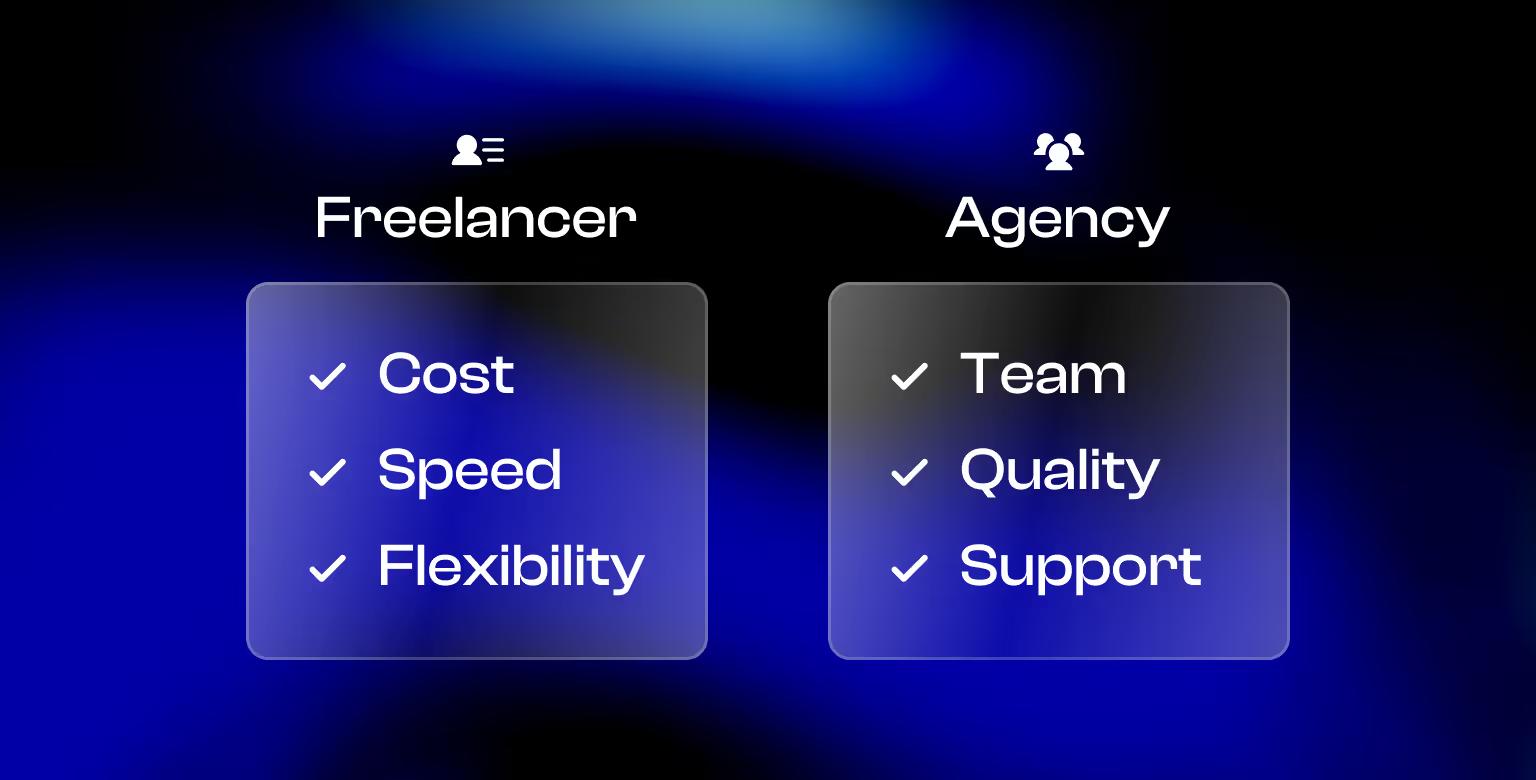
Freelancer vs Agency: Quick Comparison Table
Understanding these distinctions is key to identifying which approach aligns best with your website goals and business needs.
Here's the quick verdict, before the full breakdown below.
Hire a Freelancer If
- The project is small: a landing page, a single funnel page, or a simple marketing site.
- Budget is the deciding factor and you can manage timelines and QA yourself.
- The work moves one task at a time; a freelancer works sequentially.
- You want to talk directly to the person building the site.
Hire an Agency If
- The build needs custom integrations, e-commerce, or CMS structuring at scale.
- You're weighing long-term ROI over the lowest number on the invoice.
- Multiple pieces need to move at once to hit a fixed deadline.
- You want a dedicated project manager and a maintenance plan after launch.
Which one is right for your project?
Unsure which to choose? Answer these 5 questions to find out if you should hire a freelancer or an agency for your specific use case.
When Does a Freelancer Make Sense?
For certain projects, hiring a freelancer can be an effective choice. Here’s why:
Cost-Effective
Freelancers typically charge lower rates compared to agencies because they have minimal overhead costs. This makes them ideal for startups and small businesses working with tight budgets.
Flexible & Personalized Service
You’ll communicate directly with the freelancer, allowing for quick feedback and a more personal working relationship. Freelancers often adapt their schedules and workflows to suit your needs.
Specialized Skills
Many Webflow freelancers have deep expertise in specific areas such as UI/UX design or Webflow animations. For projects requiring niche skills, a freelancer may be the best fit.
Fast Turnaround for Simple Projects
Freelancers can often deliver simple websites or landing pages quickly since there’s no team coordination overhead.
These benefits make freelancers a strong choice for small-scale or one-off Webflow projects where agility is key.
Cons of Hiring a Webflow Freelancer
Despite their advantages, freelancers have limitations you should consider:
Limited Capacity
A freelancer is a one-person team. Large or complex projects can overwhelm them, leading to delays or compromises in quality.
Reliability Risks
If a freelancer becomes unavailable due to illness, overbooking, or other commitments, your project could stall without a backup.
Lack of Project Management
Coordination is usually yours. A freelancer builds; you sequence the work, chase the inputs and hold the date. That is fine when the project needs one skill. It becomes a job of its own when it needs four.
Variable Quality
Freelancer skills vary widely. While some are highly experienced, others may lack expertise in critical areas like SEO, CMS structuring, or advanced Webflow integrations like Webflow’s new Model Context Protocol (MCP).
These constraints matter most on mission-critical work, where one person’s availability is itself a delivery risk.
When Do I Need a Webflow Agency Instead?
For businesses with larger ambitions or complex website needs, a Webflow agency offers significant advantages:
Full Team of Experts
Agencies combine the expertise of designers, developers, SEO specialists, and project managers to deliver a strategic and well-rounded website.
Supporting in-house teams at scale
When we worked with Synthflow Ai, a fast-growing AI platform, their engineering team needed a Webflow agency that could collaborate closely on a product-led homepage experience.
Our team worked hand-in-hand with Synthflow’s developers to design and set up an interactive AI playground, ensuring it integrated seamlessly with their backend systems.
This kind of partnership is where agencies excel: providing design, UX, and frontend expertise while aligning with in-house engineering to deliver scalable, enterprise-grade web experiences.
Structured Project Management
A dedicated project manager and established workflows keep your project on schedule and reduce the risk of delays.
Higher Quality Control
Most agencies run a defined QA pass before launch. Ask what it actually checks, because having a process and having a good one are different things.
Scalability
Agencies can allocate more resources to meet tight deadlines or evolving project requirements, which is ideal for startups or enterprises scaling quickly.
Ongoing Support & Maintenance
Many agencies offer post-launch website management and optimization plans to keep your site performing as your business grows.
When all of these benefits come together, businesses start seeing real results.
Take Avarra AI as an example. They’re an enterprise AI platform helping sales reps train in avatar-led conversations.
When they came to us, their website wasn’t telling their story effectively. Prospects often left unsure what the product actually did.
By combining strategy, design, and technical expertise, we rebuilt their site in Webflow to be clear, enterprise-ready, and conversion-focused.
The result?
- 100% increase in traffic
- 120% lift in conversions
- A site that now confidently supports their enterprise sales process.
These strengths make agencies an excellent choice for SMBs and enterprises investing in high-performance Webflow projects. Read our article to explore more about the benefits of hiring a Webflow agency.
Cons of Hiring a Webflow Agency
While agencies provide unmatched expertise, there are some trade-offs to consider:
Higher Costs
Agencies generally charge more than freelancers due to team-based operations and overhead expenses. For small projects, this can feel like an unnecessary investment.
Less Direct Communication
You’ll often communicate with a project manager rather than directly with designers or developers, which can feel less personal.
More Structured Processes
Agencies follow defined workflows. While that keeps work consistent, it may feel rigid if you prefer flexibility or last-minute changes.
Potential for Lower Priority
If your project is smaller in scope, confirm with the agency that it will receive the attention and resources it deserves.
These trade-offs mean agencies are best suited for businesses that value structure, scale, and long-term reliability.
What Are the Risks of Choosing Wrong?
Hiring an agency when you needed one specialist
You pay for project management, strategy and account handling the work never called for. On a single-discipline build that overhead is a real share of the invoice, and it buys you nothing you were short of.
Hiring one freelancer when the work needed five disciplines
Your team becomes the agency. Someone internally ends up sequencing design, copy, SEO, development and QA, chasing handoffs and holding the date. That job exists whether or not anyone has been given it, and it usually lands on whoever is least able to refuse.
Choosing on hourly rate
The cheapest rate is not the cheapest project. Rework, rounds nobody scoped, and the hours you spend coordinating all arrive after the quote. Compare estimated totals rather than rates, and ask who absorbs the hours that were not in the estimate.
Choosing on team size
Twenty people is not automatically safer than one excellent senior. A bigger team means more cover when somebody is ill, and more people between you and the person actually building it. Ask who that person is, and how much of their week you get.
Red Flags to Watch For
A few signals are worth checking before you sign, whichever way you go.
- The freelancer goes quiet mid-project, with no updates and no straight answer on timeline.
- The agency won't name who's actually running your project, or commit to one point of contact.
- Neither can show a portfolio you can verify, or put you in touch with a past client.
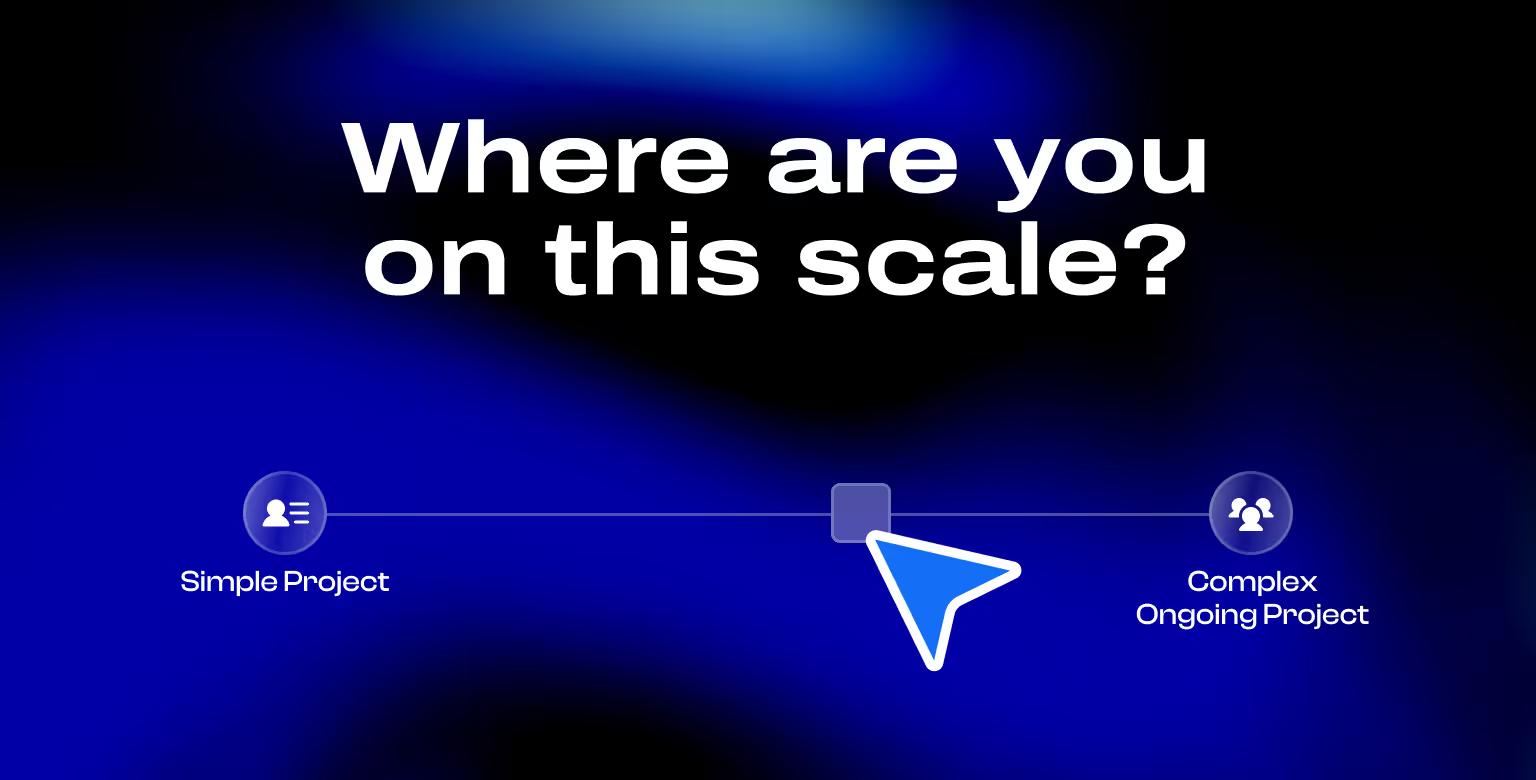
None of this reduces to company size. It reduces to how many things have to be true at once, and who is holding them. An agency’s expertise and support are often worth the investment.
Next Steps: Resources and Expert Help
If you’re still exploring your options, here’s how you can move forward confidently:
- DIY Approach: If you’re considering building your Webflow site yourself, explore our Webflow Development Resources for helpful guides and templates.
- See What’s Possible: Browse our Webflow case studies to see how startups, SMBs, and enterprises have achieved measurable results by partnering with our team.
- Ready for Expert Help? Khod is a strategy-first Webflow agency for B2B tech companies. We build sites that hold up as your business scales.
The choice between a freelancer and an agency depends on your goals. For mission-critical projects and long-term success, an agency can provide the expertise and support to take your Webflow site further. If you decide to partner with an agency, make sure to read our guide on how to choose the right Webflow agency for your business to ensure you pick the best fit for your needs.
Frequently Asked Questions About Choosing a Webflow Agency vs Freelancer
Should I hire a freelancer or a Webflow agency for my project?
Choose a freelancer for a small, well-defined project, like a landing page or a simple marketing site, where budget is the main constraint and you can manage timelines yourself. Choose a Webflow agency when the build needs custom integrations, e-commerce, or CMS work at scale, when tasks need to run in parallel to hit a deadline, or when you want a dedicated project manager and support after launch. For most SMB and enterprise projects, the agency route reduces risk even at a higher upfront cost.
What is the average cost of hiring a Webflow agency vs a freelancer?
Freelancers usually quote by the hour, commonly $20 to $100. Agencies usually quote per project, commonly $5,000 to $30,000 and up. To compare them, ask the freelancer for estimated total hours and multiply: an hourly rate on its own tells you nothing about the final bill, and the gap narrows once you count the hours you spend coordinating. For a comprehensive breakdown of Webflow website costs, from DIY projects to hiring freelancers or agencies, see our cost of building a Webflow website guide.
Can a freelancer handle a complex Webflow project?
It depends on their skillset. While some freelancers specialize in advanced Webflow builds, large or highly complex projects usually benefit from an agency’s team-based approach. If you are building an AI product, we compared eight Webflow agencies on their AI-sector work.
Do Webflow agencies provide long-term support?
Yes, most agencies offer Webflow maintenance and optimization packages to keep your website performing well post-launch.
How long does a typical Webflow project take?
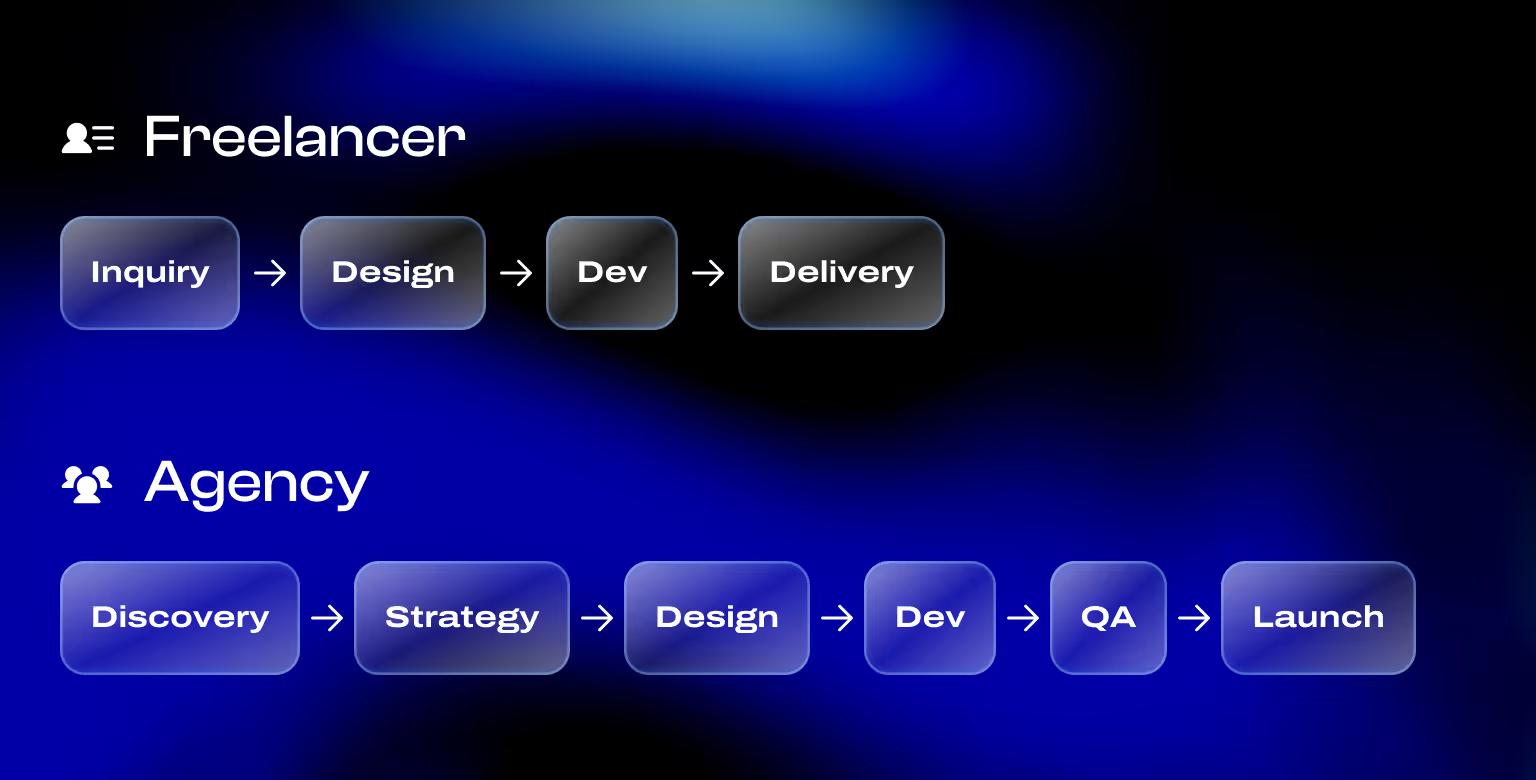
Freelancers may deliver simple 10-page sites in 2–4 weeks, while agencies often take 6–12 weeks depending on scope and complexity.
What are the risks of hiring a freelancer vs an agency?
Freelancers can pose reliability risks (illness, bandwidth issues), while agencies minimize these with backup teams but at a higher cost.
Can I switch from a freelancer to an agency later?
Yes, but it often requires rework. For complex projects an agency can reduce coordination risk and make it easier to hold one standard across design, development, SEO and QA.
Share the Article
Evgenii Tilipman is the founder of Khod, a digital agency helping B2B tech companies turn their websites into demand-generating assets.
He works closely with founders and GTM teams to define positioning, structure high-converting pages, and build scalable Webflow systems that support growth.
Before founding Khod, Evgenii led Webflow development at an agency and worked with Memberstack to build products for the Webflow community. He has since supported teams from seed to Series C across positioning, conversion, and Webflow development.
Outside of work, he's a husband, dog dad, and someone who treats his health and long hikes with the same consistency he brings to his projects.
Table of Content


Kickstart your project today!
Book a call to discuss your goals and how we can help you reach them.
See Khod First on Google
Explore Related Articles
Website Strategy • Sep 10, 2026 • 15 min read
8 Best Webflow Agencies for AI Startups in 2026
Tool Comparisons • Jul 29, 2026 • 10 min read
Webflow vs Next.js: Pros, Cons, and How to Decide
Tool Comparisons • Jul 14, 2026 • 13 min read
Webflow vs Custom Code: Pros, Cons, and How to DecideYour Next Deal Starts With Your Website
Most deals are won or lost before your sales team gets involved. Let's make sure your site is ready for that moment.
